 News
Georgia Beats Florida 27-8: Four Turnovers and the Atlanta Rivalry Game Explained
A lopsided rushing margin and four Florida turnovers tell more of the story than the final score alone.
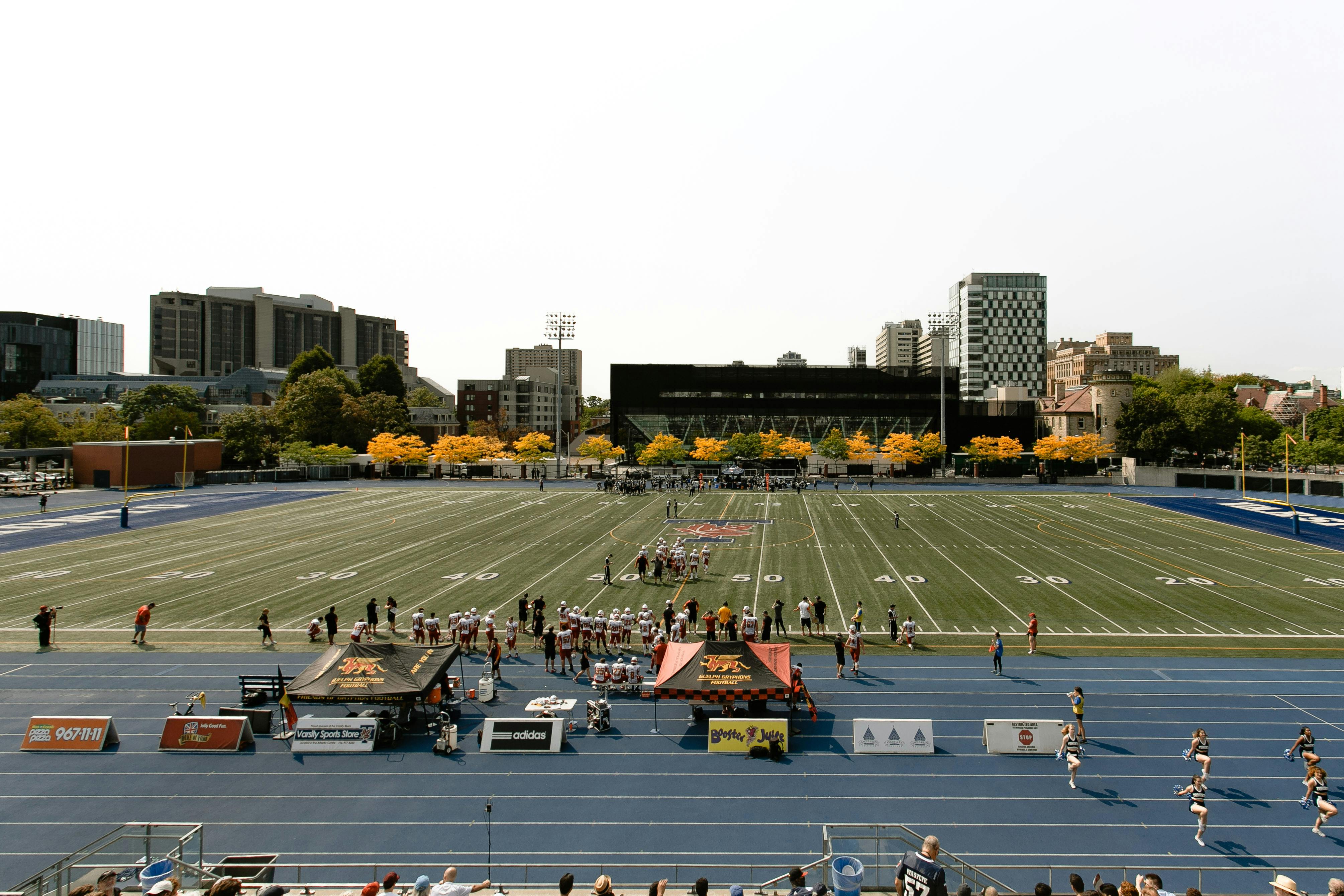
Representative licensed photograph of a football game in Toronto, not the Georgia–Florida game in Atlanta. Photo: Wendy Wei / Pexels (Pexels free-use license).
Georgia's 27-8 victory over Florida was decided by possession and field position as much as scoring. The Bulldogs won the October 31 rivalry meeting in Atlanta after Florida repeatedly lost opportunities through turnovers. Both schools' official game center and Florida box score confirm the final score and the striking rushing-yard disparity.
What was the Georgia vs. Florida final score?
Georgia won 27-8, leading 7-0 after one quarter and 24-0 at halftime. Neither team scored in the third quarter. Florida scored its eight points in the fourth, but Georgia added a field goal to finish 19 points ahead. The Bulldogs improved to 7-1 overall and 5-1 in SEC play; the Gators fell to 5-3 and 3-3, according to the Associated Press game recap carried by CBS Sports.
How did four Florida turnovers change the game?
The biggest swing came just before halftime. Florida quarterback Tramell Jones Jr. lost the ball when sacked by Quintavius Johnson, and Georgia linebacker Chris Cole recovered it and ran 66 yards for a touchdown. The score arrived with 29 seconds left in the half and extended Georgia's lead to 24-0. A possession that might have narrowed the gap instead produced seven points for the Bulldogs.
Florida also threw three interceptions. Starter Aaron Philo was intercepted twice before Jones entered, and Jones was picked off in the end zone during the third quarter. That last interception ended a long drive near Georgia's goal line. Those turnovers matter more than a generic “four mistakes” headline: they eliminated scoring chances and created a direct defensive touchdown. The Associated Press recap documents the sequence.
Why was Georgia's rushing advantage so decisive?
The official team totals show Georgia ran for 217 yards while Florida managed 48. That 169-yard gap helped Georgia sustain drives and put Florida in difficult passing situations. Georgia had 318 total yards to Florida's 246, so the overall yardage difference was far smaller than the rushing gap. The game is a useful reminder that the type of yards and the cost of lost possessions can outweigh raw offensive totals.
Florida's Jadan Baugh, who entered as a prominent SEC touchdown runner, finished with 38 yards on 17 carries. Georgia's Nate Frazier led its rushers with 67 yards and scored on a one-yard run; Bo Walker also had a one-yard rushing touchdown. Quarterback Gunner Stockton completed 13 of 23 passes for 101 yards. He did not need a high-volume passing performance with the running game and defense producing results.
Why was the rivalry game in Atlanta instead of Jacksonville?
The 2026 meeting took place at Mercedes-Benz Stadium in Atlanta rather than the rivalry's familiar Jacksonville location. The AP report explains that renovations at Jacksonville's EverBank Stadium required a temporary change. The following year's game is scheduled for Tampa before the series is expected to return to Jacksonville. The venue change did not change the official neutral-site designation.
What comes next for Georgia and Florida?
Georgia's published schedule lists a November 7 road game at Ole Miss. Florida will need to address both ball security and its inability to establish the run before its next contest. Future rankings and playoff implications depend on later results; a single October score does not settle either team's postseason position.
For context on the same October 31 college-football slate, read our USC–Ohio State red-zone analysis and Miami–North Carolina comeback breakdown.
Sources and methodology
- University of Georgia Athletics: official October 31 box score.
- University of Florida Athletics: official game statistics.
- Associated Press: game chronology and turnover details.
Score and statistics verified against the two university game centers; analysis is NewsTrendus' own.