 News
USC Beats No. 2 Ohio State 30-18: Why the Buckeyes' Red-Zone Drives Mattered
Southern California's 30-18 victory over second-ranked Ohio State on October 31 was more than a headline upset. USC turned early explosive plays into touchdowns while the Buckeyes repeatedly moved the ball without finishing drives.
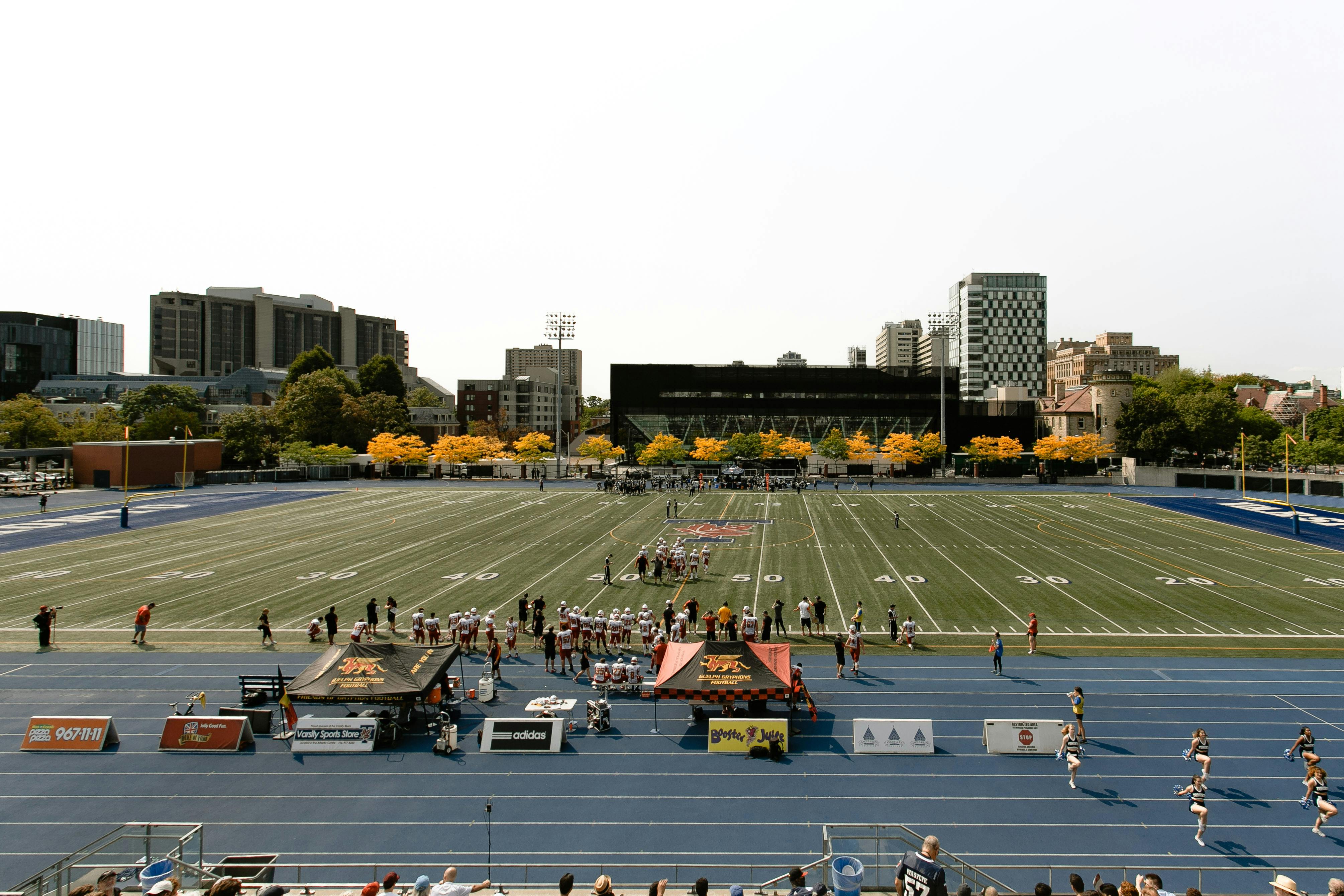
Representative licensed photograph of a football game in Canada, not the USC–Ohio State game or its players. Photo: Wendy Wei / Pexels (Pexels free-use license).
USC beat Ohio State 30-18 on Halloween night at the Los Angeles Memorial Coliseum. The result, confirmed by USC Athletics and Ohio State Athletics, dropped the Buckeyes to 6-2 overall and lifted the Trojans to 7-2. The biggest contrast was not total yardage but what each team did with scoring opportunities.
What was the final USC–Ohio State score?
USC won 30-18. By quarter, Ohio State scored 3, 6, 0 and 9 points; USC scored 14, 6, 7 and 3. The Trojans led 20-9 at halftime and 27-9 after three quarters. The final margin was 12 points, but USC kept Ohio State out of the end zone for most of the game.
How USC's early big plays changed the game
Freshman receiver Trent Mosley caught a 69-yard touchdown pass on USC's second offensive play, according to the Trojans' official recap. He finished with five catches for 101 yards. His 44-yard punt return later helped create another scoring opportunity, finished by a nine-yard Waymond Jordan touchdown run.
USC quarterback Jayden Maiava threw for 222 yards and a touchdown. King Miller added a rushing touchdown, and a long catch-and-run by tight end Mark Bowman helped set it up. Those plays mattered because they produced immediate points or short fields rather than merely adding to the team's yardage.
Why did Ohio State lose despite 464 yards?
The Buckeyes moved the ball, but their early drives repeatedly ended in field goals. Ohio State's own postgame account confirms 464 total offensive yards and four Connor Hawkins field goals. It also documents a fumble and red-zone execution problems. Ohio State entered halftime with nine points despite reaching threatening field position.
That is the key statistical distinction: yardage describes movement; touchdowns determine how efficiently a team converts movement into points. USC's explosive gains reached the end zone early. Ohio State's sustained gains often did not. This is an interpretation of the documented drives, not a claim that one statistic alone caused the defeat.
Who played quarterback for Ohio State?
Freshman Luke Fahey started in place of injured Julian Sayin. Fahey passed for 260 yards in his first career start, according to the official team recaps. Receiver Jeremiah Smith scored on a one-yard touchdown catch with 2:12 remaining and set a Big Ten career touchdown-reception record, according to Ohio State. That late score narrowed the deficit but did not change the result.
Sayin's absence was significant context, but the team's inability to finish drives and the defense's concessions of explosive plays cannot be attributed solely to a quarterback change.
What happens next for USC and Ohio State?
Ohio State is scheduled to host Oregon on November 7, with kickoff listed by Ohio State Athletics for 3:30 p.m. Eastern. USC has a bye before traveling to Indiana on November 14, according to USC Athletics. Rankings and postseason projections may change after the rest of the weekend's results; this article does not present an unconfirmed playoff outcome as settled.
Sources and verification
- USC Athletics, October 31 — final score, team records and scoring plays.
- Ohio State Athletics, November 1 — Buckeyes' yardage, field goals, record and upcoming Oregon game.
- CBS Sports / Associated Press, October 31 — independent game recap and player context.
For corrections or source questions, use our contact page.