 News
USDA Adds AI Checks Before November 10 Crop Report
USDA says it will add an AI-assisted anomaly check to its November 10 crop report after a September corn-estimate processing error. The tool is a supplementary safeguard, not a replacement for statistical review.
This is a source-linked desk explainer, not first-hand reporting. Research and drafting may use AI-assisted tools. Follow the cited source links and read our editorial and corrections policy.
This is an AI-assisted, source-linked desk explainer, not firsthand reporting. Read our editorial and corrections policy.
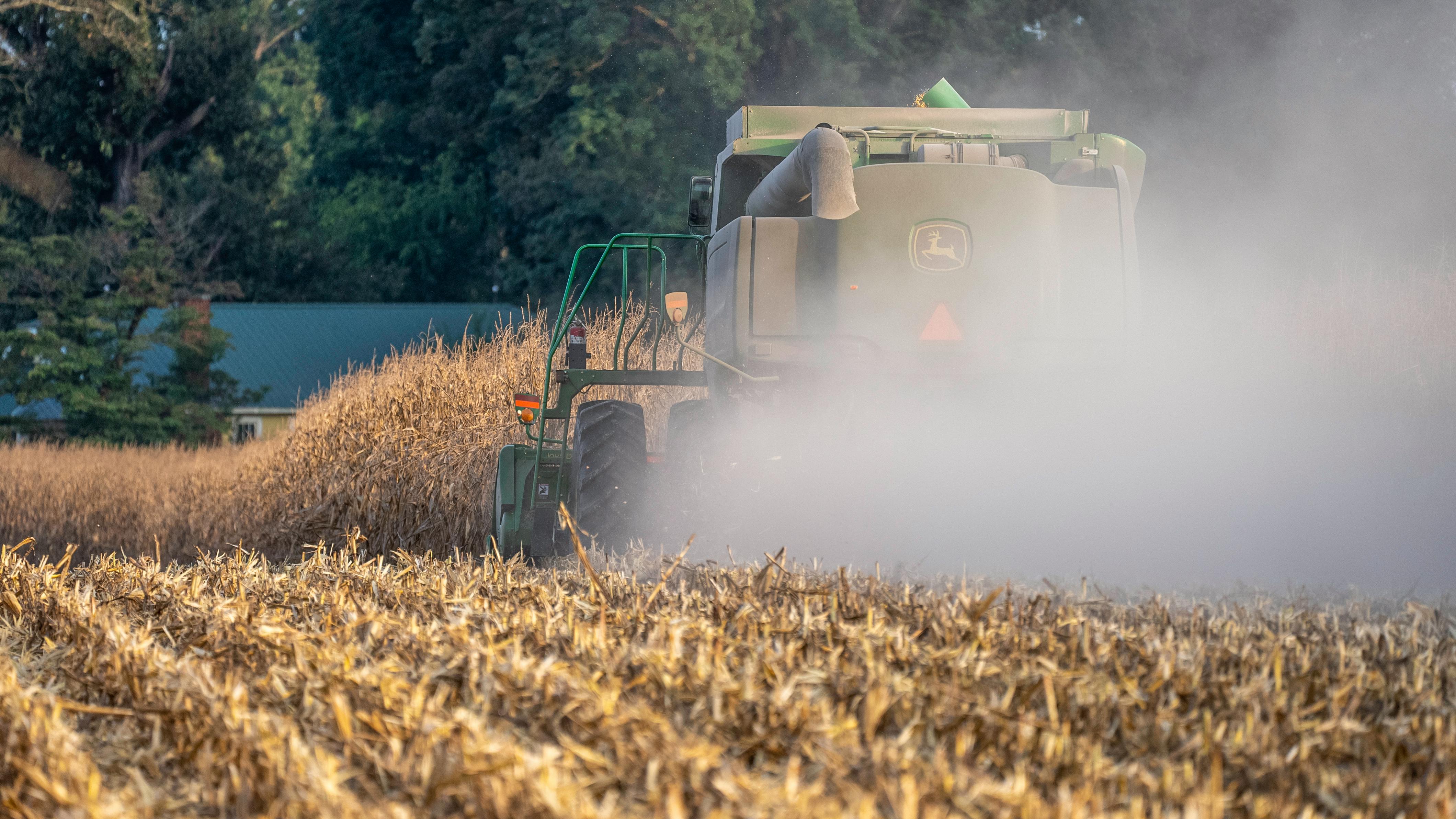
Representative licensed photograph of a corn harvest; not a photograph of USDA's AI system or the September 2026 data review. Photo: Mark Stebnicki / Pexels.
What is changing in USDA crop-report checks?
USDA plans an additional AI-assisted screening step to identify anomalies before publication, according to Reuters reporting on November 6. Under Secretary Scott Hutchins described the system as a supplement to established review rather than a substitute for agency statisticians. The department has not publicly established that this tool will eliminate future errors; automated flags still require human interpretation.
The announcement matters because farmers, grain traders, lenders and food businesses rely on USDA estimates for decisions about crops, contracts and inventories. A correction to a government forecast is not the same as a change in the physical harvest.
What went wrong with the September 2026 corn estimates?
The USDA National Agricultural Statistics Service (NASS) October 24 notice says incorrect acreage weights were used when combining irrigated and non-irrigated objective-yield observations in Kansas and Nebraska. This affected September plant-population and ear-count estimates, state yields and the national forecast. NASS says the October forecasts were reviewed and remained unchanged.
September corn forecast corrections: Kansas, Nebraska and US
| Area | Original September forecast | Corrected September forecast |
|---|---|---|
| Kansas | 121 | 118 (down 3) |
| Nebraska | 177 | 182 (up 5) |
| United States | 178.5 | 178.8 (up 0.3) |
Original values above are calculated from the corrected values and differences disclosed in the NASS correction notice. They are historical September
When does the November USDA Crop Production report come out?
The official NASS calendar lists Tuesday, November 10, 2026, at noon Eastern Time for Crop Production. NASS also lists a 12:05 p.m. ET briefing. The report is still pending as of this article's publication. Any final numbers, price response or effectiveness of the new AI checks will only be assessable after release.
What should US farmers and grain-market readers watch?
First, compare the new report with the corrected September history. Using the original uncorrected September figures could create a misleading trend. Second, distinguish yield from production: bushels per acre describe output per harvested acre, while total production also depends on harvested area. Third, look for USDA correction notices: a clean release on November 10 would not prove that all underlying estimation uncertainty has disappeared.
The October 23 NASS notice confirms the September corrections were entered in Crop Production reports and Quick Stats. The follow-up notice says NASS will strengthen pre-publication acreage-weight and objective-yield checks. Reuters reports that the new AI tool is one further step in that process, not an independent guarantee of accuracy.
What is known—and what is not?
Confirmed: NASS corrected September corn data for Kansas and Nebraska, left October forecasts unchanged, and scheduled its next Crop Production report for November 10. Reported plan: USDA intends to add AI-assisted anomaly screening. Not yet known: whether the tool will identify every potential data-processing mistake, what the November yield numbers will show, or how markets will respond. None should be inferred from the September correction alone.
For related context, see our US Business reporting, Technology coverage and November consumer-sentiment explainer. Those stories address different economic indicators and should not be confused with USDA agricultural statistics.
Sources and editorial notes
- USDA NASS, October 24: processing error and exact corrected yields
- USDA NASS, October 23: corrections and October forecast status
- USDA NASS: November 2026 publication schedule
- Reuters, November 6: USDA officials' AI-check announcement
Source-linked desk reporting, November 7, 2026. This article does not report unreleased November crop forecasts.