 News
SoftBank's $7 Billion Loss: US Data-Center Costs Explained
SoftBank Group reported a roughly ¥1.1 trillion ($7 billion) net loss for the quarter ended September 2026. A major reason was a charge tied to equipment procured for planned U.S. AI data centers—not proof that the projects have been canceled.
This is a source-linked desk explainer, not first-hand reporting. Research and drafting may use AI-assisted tools. Follow the cited source links and read our editorial and corrections policy.
This article interprets public company disclosures and independent reporting; it is not firsthand earnings-call reporting. Research and drafting may use AI-assisted tools. See our editorial and corrections policy.
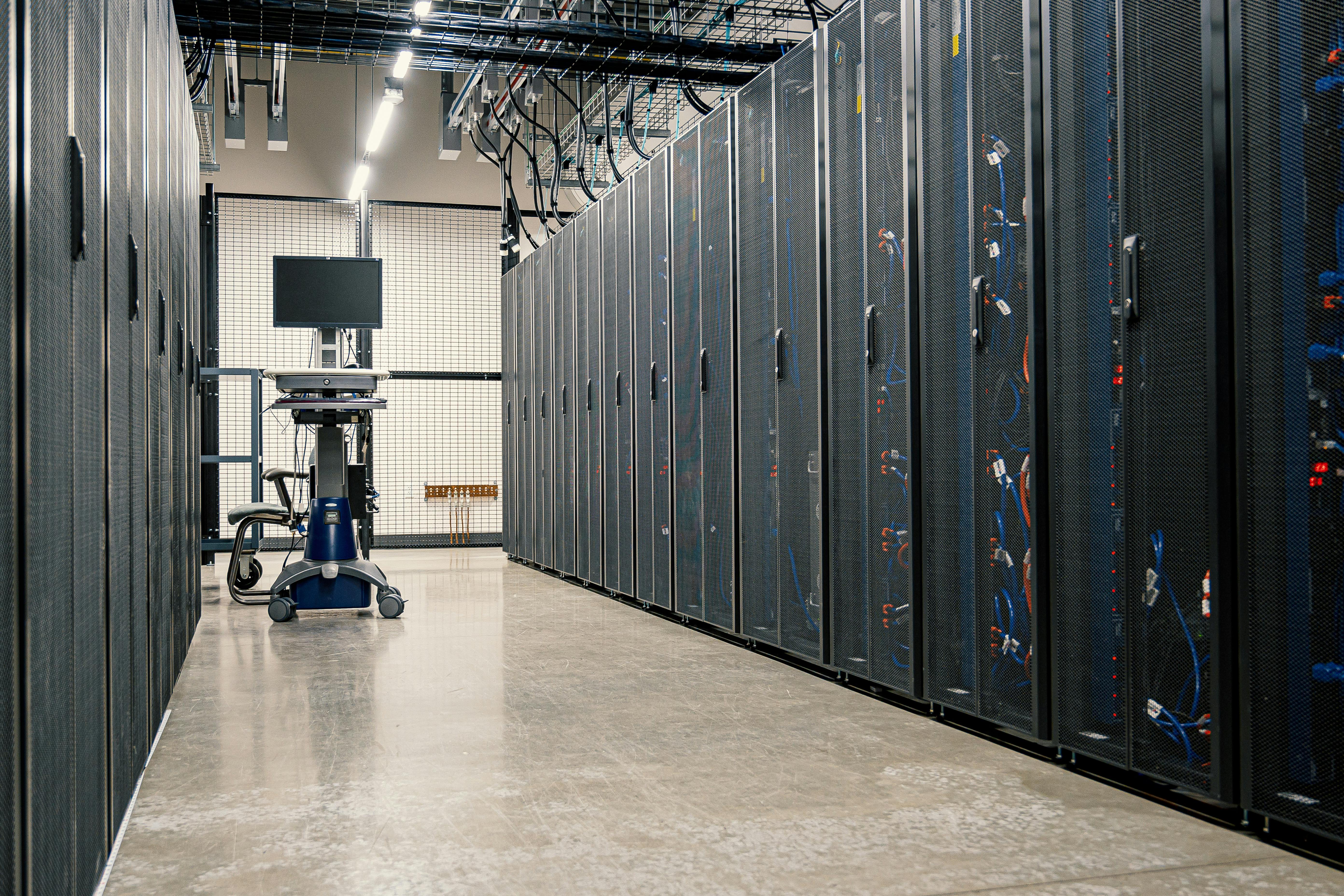
Representative licensed photograph of server racks; not a photograph of a SoftBank project or its equipment. Photo by Brett Sayles / Pexels.
What caused SoftBank's $7 billion quarterly loss?
The Japan-based investment group reported a net loss of roughly ¥1.1 trillion ($7 billion) for its fiscal second quarter, compared with a profit of approximately ¥2.5 trillion a year earlier. The company's November 10 investor-relations materials provide the official earnings context. Independent accounts from Reuters and Associated Press corroborate the overall loss.
The headline loss is not a direct measure of how much money SoftBank spent building an individual U.S. data center. Investment valuations, financing costs and accounting charges can all affect the group's bottom line. Readers should avoid equating a reported accounting loss with a construction budget or a confirmed project shutdown.
Why did US data-center equipment produce a charge?
Reuters reported a roughly $3.7 billion charge related to advance payments for equipment intended for U.S. AI data-center projects after procurement requirements changed. The Wall Street Journal described the associated special loss at ¥597.2 billion. Those descriptions refer to the reported accounting impact of changed equipment plans, not a declaration that all equipment is unusable or every project has been abandoned.
SoftBank may receive as much as $2.1 billion in rebates on future purchases, according to Reuters. That figure is conditional: a potential credit on future orders should not be treated as an immediate refund or as a guaranteed offset to the entire charge.
What does this mean for the Ohio AI projects?
Reuters identified a major Ohio development among the U.S. projects and reported that Chief Financial Officer Yoshimitsu Goto described them as early-stage initiatives expected to expand. The immediate takeaway for U.S. readers is that an equipment-plan revision and an accounting loss do not, on their own, establish a construction cancellation, local hiring timetable or an operational opening date.
For residents, suppliers and businesses watching new data-center construction, the more useful next evidence would be project-specific permitting, power agreements, procurement updates and official construction milestones. This earnings announcement does not establish a revised Ohio opening date, confirmed job count or local utility-rate impact.
How much financial pressure is coming from AI investments?
Reuters reported that quarterly financing costs more than doubled year over year to about ¥462 billion. SoftBank also raised $56.5 billion during the quarter and has committed approximately $64.6 billion for a roughly 13% stake in OpenAI, according to the same reporting. Borrowing and exposure to private AI valuations make it important to distinguish investments' long-term potential from their near-term funding costs.
The results come as U.S. AI infrastructure investors weigh whether rapid spending on chips, electricity and data centers will translate into durable demand. For related context, see NewsTrendus' Google TPU hardware explainer and the latest Business coverage. Hardware capabilities and capital spending are different questions: neither guarantees a project's profitability.
What should investors and US communities watch next?
Three separate questions deserve attention: whether future equipment rebates actually materialize, whether financing costs stabilize, and whether specific U.S. data-center projects disclose updated schedules and budgets. None of those outcomes is established by the headline loss alone. SoftBank's investor materials are the primary source for future financial disclosures; project developers and local authorities are better sources for site-specific construction information.
This article is explanatory news, not an investment recommendation. Currency conversions are approximate as reported in contemporaneous coverage; readers comparing filings should use the yen-denominated company figures and the period to which each figure applies.
Sources and verification
SoftBank Group investor relations — November 10, 2026 fiscal Q2 materials (primary); Reuters — quarterly loss, equipment charge, possible rebates and financing costs; Associated Press — independent results confirmation; Wall Street Journal — equipment procurement context. Estimates and possible future rebates are explicitly distinguished from realized results.