 News
IRS Tax Pro Account Now Lets Pros Pay Business Taxes
A November 6 IRS update gives authorized tax professionals a new way to submit certain federal tax payments for business clients. Here is what the tool can and cannot do.
This is a source-linked desk explainer, not first-hand reporting. Research and drafting may use AI-assisted tools. Follow the cited source links and read our editorial and corrections policy.
This source-linked desk explainer is not a firsthand test of an IRS account. AI-assisted research and drafting may be used. Read our editorial and corrections policy.
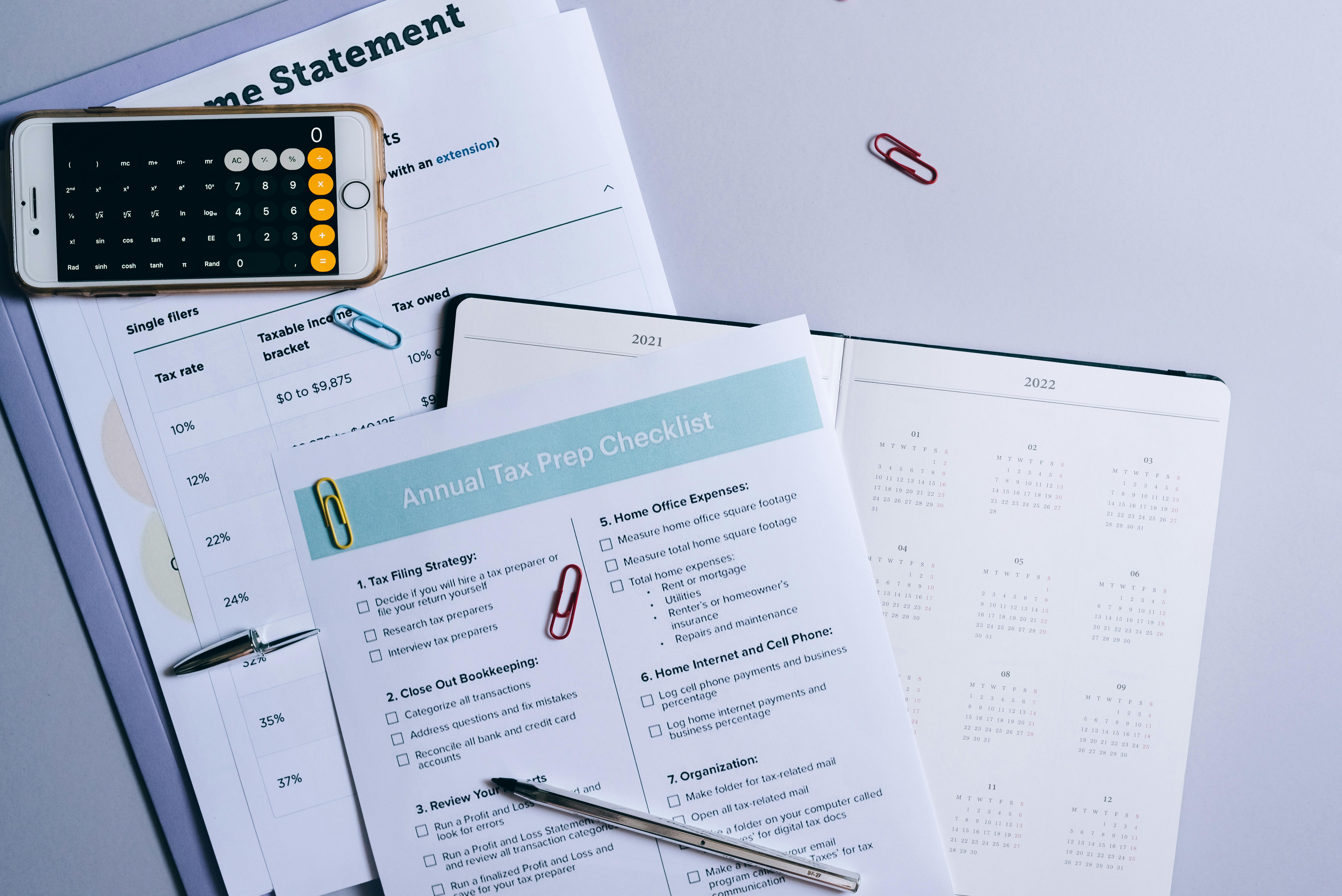
Representative licensed photograph of tax documents, not a photo of the IRS Tax Pro Account interface. Photographer: Leeloo The First / Pexels.
Which business tax payments can a professional make?
The IRS announcement IR-2026-134 lists five supported categories. The distinction matters for accountants and small-business owners comparing payment workflows: this is an expansion of an existing professional portal, not a new tax or a change to filing deadlines.
| Payment type | Practical meaning |
|---|---|
| Full or partial balance | Pay all or part of a balance due |
| Amended return | Payment associated with an amended filing |
| Extension | Payment associated with an extension |
| Proposed tax assessment | Payment toward a proposed assessment |
| Federal tax deposit | Eligible federal tax deposit through the portal |
These descriptions summarize the IRS categories. The release does not say every tax form, payment method or business situation is supported; users should confirm eligibility inside the authenticated service.
Who can use the new IRS business payment feature?
The IRS says the professional must have appropriate authorization for the business client and the tax matters involved. A business owner's general engagement with a preparer is not, by itself, proof that a specific IRS authorization is active. The professional should check the authorization relationship and payment options in Tax Pro Account before promising to transmit funds.
In its June 2026 explanation, the agency described how qualified professionals manage Centralized Authorization File (CAF) relationships and access information within their authorization scope. The February 2026 business-level expansion also gave designated representatives tools for managing business CAF access. The November announcement adds payment functionality for authorized business clients.
What changed compared with the previous portal?
Before this announcement, professionals could use Tax Pro Account to view business client balances and payment activity but could not submit a payment on a business client's behalf through that service. They could already make certain payments for individual clients. The new release closes that particular business-client gap.
For a small business, the practical benefit may be fewer handoffs between a tax adviser and the business's payment process. That is a workflow possibility, not a guarantee of faster IRS processing, lower fees or an extended due date. Business owners should continue reconciling the payment confirmation against their own records.
How should a business and its tax professional proceed?
- Confirm the preparer has the appropriate IRS authorization covering the relevant business and tax matter.
- Sign in through the official IRS Tax Pro Account page, rather than a link in an unsolicited email.
- Review the client's balance, the intended tax period and the available payment type before submitting anything.
- Retain the IRS confirmation and reconcile it with the business's accounting records; do not assume a submitted payment automatically changes an underlying filing obligation.
- If the option is unavailable, check authorization and the IRS list of other business payment channels.
The IRS did not announce a special enrollment deadline or new payment discount for this feature. Ordinary tax deadlines still apply. Its fourth-quarter business tax calendar remains a useful starting point for deadline checks, subject to the taxpayer's circumstances and any applicable relief.
Does this replace Business Tax Account or EFTPS?
No replacement was announced. The IRS describes Business Tax Account as a self-service option for eligible business users, while Tax Pro Account serves authorized tax professionals. The agency also lists the Electronic Federal Tax Payment System (EFTPS) and other electronic channels. Which channel is appropriate depends on who is making the payment and the transaction.
The distinction also helps prevent a misleading interpretation of the headline: this is not an announcement that an accountant may transfer money from any client bank account without authorization. Businesses should verify funding instructions directly with their professional and the IRS.
What should tax firms watch next?
Firms should review which client authorizations are active, train staff to distinguish supported payment types and establish a confirmation-retention process. Business owners can ask their preparer whether their specific payment is supported and who will be responsible for checking the due date. Neither the IRS release nor the supporting guidance supplies a universal processing-time promise.
For broader coverage, visit our Business news section and Latest News Articles. These are navigation links, not claims of related coverage of the same IRS feature.
Sources and editorial transparency
- IRS IR-2026-134 — November 6 announcement and supported payment types
- IRS Tax Tip 2026-50 — professional authorization and account capabilities
- IRS IR-2026-22 — earlier business CAF expansion
- IRS IR-2026-46 — separate Business Tax Account access
Published November 8, 2026. This is an independently structured service explainer based on official IRS documentation, not an interview or first-hand portal test. The representative photograph does not depict an IRS website.